


 Shkruar nga Stefano Montefiori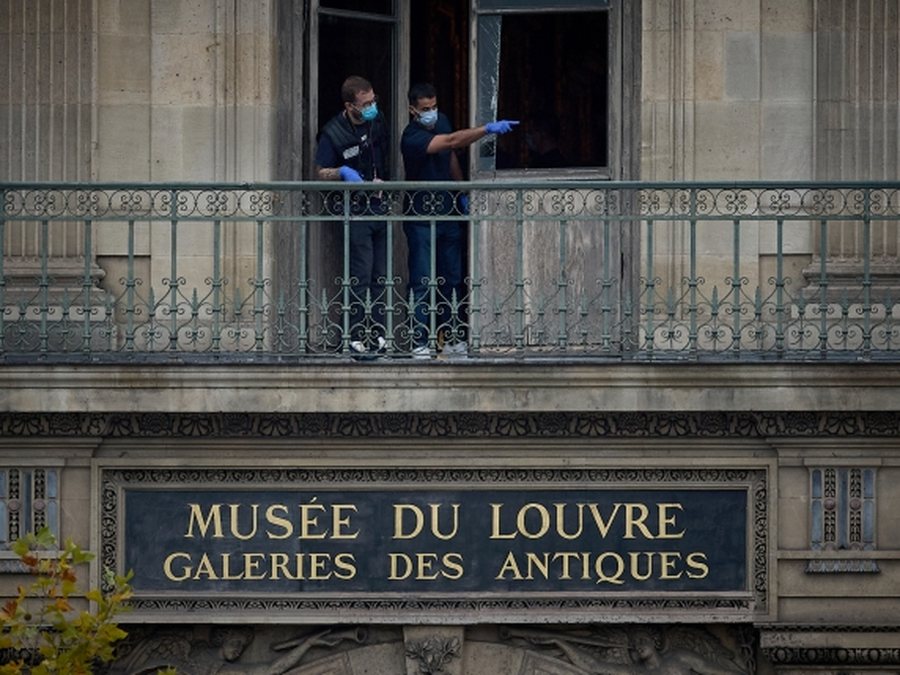
But this event came as no surprise, as the Louvre's inadequate security has long been an issue of concern.
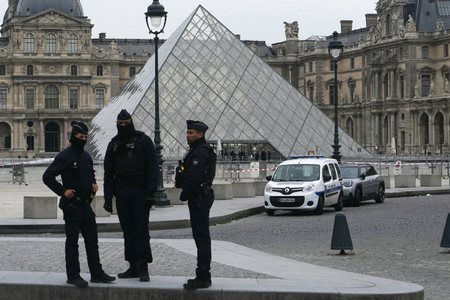
The spectacular robbery at the Louvre yesterday has stirred emotions around the world. The most visited museum in the world, with nearly 9 million visitors a year, is one of the symbols of France.
But this event came as no surprise, as the Louvre's inadequate security has long been an issue of concern.
If yesterday and today, the museum remained closed all day due to the theft, on June 16 of last year, another Monday, the Louvre closed its doors after a spontaneous and unannounced strike by its employees.
"What was supposed to be a monthly informational meeting has turned into a huge demonstration of anger ," said Sarah Sefian, then the official for reception and cultural mediation.
Unbearable crowds, chronic staff shortages and "unsustainable" working conditions.
Receptionists, wait staff and security personnel denounced overcrowding inside a giant building that welcomes more than double the expected number of visitors, as its president, Laurence des Cars, admitted.
Ministers, opposition leaders and the President of the Republic described the event as an "attack on the heart of France".
However, we can talk about a disaster that was predicted to happen, at least since January 22, when Le Parisien revealed the confidential note sent by President Laurence des Cars to the Minister of Culture, Rachida Dati.
The document raised the alarm over the state of the objects, which "reached a worrying level of obsolescence". It also reported "decay" in sometimes very degraded spaces, where rain manages to penetrate. As well as worrying temperature changes that endanger the preservation of the works.
Danger to the palace, but also to its paintings, especially the Mona Lisa, "Leonardo da Vinci's masterpiece that belongs to the whole world." Elevated to iconic status, the Mona Lisa exudes a fascination that has not faded over the decades.
As a result of this popular enthusiasm, the public flocks to the Hall of States without being given the keys to understanding the work and the artist, calling into question the very mission of the museum in service to the public. The statement concluded with an appeal: "This situation can no longer tolerate the status quo; structural challenges require a new impetus."
President Laurence des Cars's cry of alarm caused a great commotion and prompted the intervention of the President of the Republic, who less than a week later, on January 28, went to the Louvre to announce, in front of the Mona Lisa, a colossal modernization plan, called the "New Renaissance of the Louvre": an effort of approximately 800 million euros over 10 years, financed mainly by private investment. Macron announced an international architectural competition for the inauguration "by 2031, no later".
Despite a major project and a comprehensive reconstruction of the museum, concrete problems and the Louvre have remained unresolved.
And another report, this time from the Court of Auditors, prepared in recent weeks, revealed a few hours ago by the public radio station France Info and which will be published in full next November, denounces "significant and persistent" deficiencies in the museum's security.
In the Denon area, where the Apollo Gallery, which was targeted by thieves, is located, as well as Gioonda, a third of the rooms do not have surveillance cameras.
In the Richelieu area, three-quarters of the rooms do not have video surveillance equipment. In total, only a little more than a third of the rooms have at least one camera, the Court of Auditors notes.
Despite an annual operating budget of 323 million euros, "the amounts committed to security are modest compared to the estimated needs," the report states.
Faced with criticism of the Louvre's security system, President Laurence des Cars assured that "the New Louvre Renaissance project, launched in January, includes increased security, which will ensure the protection of what constitutes our memory and culture."
However, many are calling for the resignation of a president who neither solved nor addressed these problems./ Adapted from "Pamphlet", taken from "Corriere della Sera"





Lini një Përgjigje