


 Shkruar nga Mario Platero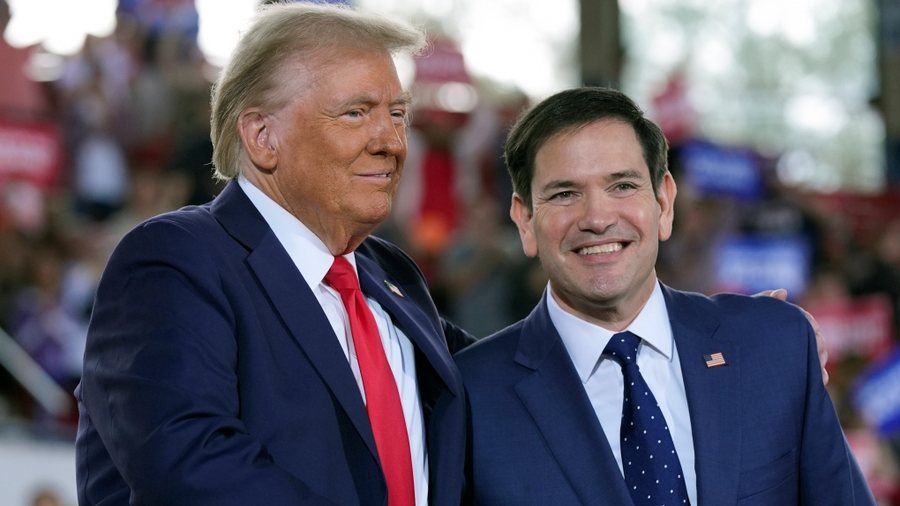
Trump has announced his intention to attack drug traffickers on Venezuelan soil and has ordered the deployment of an aircraft carrier to the area. What does this mean, given that the US president believes that Venezuelan leader Maduro himself is running the drug trade? The tycoon's strategy and what do Rubio and the newly crowned Nobel laureate Machado have to do with it?
There is the surface, the thriller-like tension, the movie-like American attacks in international waters against ships (even a small submarine) used by suspected Venezuelan drug traffickers, first in the Caribbean Sea, then in the Pacific.
There is an unexpected escalation after President Trump's announcement that "CIA Special Forces will attack drug traffickers and their bases, including on Venezuelan soil." And then Secretary of War Hegseth when he announced that the aircraft carrier Gerald Ford has been sent to the area under the control of the Southern Command, that is, to Latin America.
The accusations against Maduro are that he controls drug cartels that bring additional revenue to a nation in difficulty. But after taking action and fighting the drug cartels, to "save hundreds of thousands of lives in America", as the President explained, Donald Trump is pursuing a more elaborate economic, political and geopolitical plan aimed at interrupting the privileged relationship that Russia and China have developed with Venezuela for energy supplies and, above all, containing the great influence that Beijing has accumulated in the region.
Then there is the domestic aspect, with Secretary of State Marco Rubio's intelligent and forceful intervention against other administration officials who had succeeded in urging Trump to pursue a pragmatic and transactional approach towards Maduro.
There is the regional agenda, which, following the attacks on drug traffickers, aims for a possible regime change in Caracas, aiming to overthrow the regime and allow Maria Corina Machado, the opposition leader, neutralized by Maduro in manipulated elections, to take power.
Finally, there is the romantic and not-so-random background to Trump!
As you may recall, Machado herself received the Nobel Peace Prize a few days ago for her heroic resistance to the dictatorship in Caracas: "a woman who keeps the flame of democracy burning amidst the growing darkness."
However, things started out very differently at the beginning of Trump's second administration. Since his first term, the US President had unsuccessfully challenged Maduro. Then Joe Biden tried (with a $25 million reward for anyone contributing to his arrest). Before them, other administrations had unsuccessfully attacked communist dictatorial regimes in Caracas, even during the reign of Hugo Chávez (Barack Obama mentioned the rhetoric of "human rights being violated in Caracas", and Chávez responded by calling him a "clown").
But a few months ago, at the beginning of his second term and without paying attention to his campaign promises, Trump, as is his wont, contemplated a U-turn on Venezuela. He ignored the fact that Maduro “stole” the election, which some NGOs estimated he lost by 70% of the vote to the opposition, and instead drew up a plan developed by his advisers: Given that Maduro also controls the country militarily with an iron fist, why not seek a deal?
The proposal: America would stop active and rhetorical hostilities against Maduro if the Venezuelan government cut off its energy supply contracts with China and Russia (and Cuba, a longtime ally of both Chavez and Maduro), pledging to cede all of its energy and natural resources exclusively to the United States. This interests Trump, as not only is there an attractive economic aspect, but it would also worsen Caracas’ relationship with Beijing and Moscow, which worries Washington. China’s separation from Venezuela would send a strong message to the rest of the region, where China, including in the Caribbean, is extremely active with large infrastructure projects. Maduro overcomes the awkwardness of reaching an agreement with his former enemy and, according to informed sources and American media, including the New York Times, agrees to secretly negotiate a deal: the benefit of ensuring his survival is more important than his ideological fight against American capitalism. And the first contacts begin.
It is at this point that Secretary of State Marco Rubio enters the picture, confirming himself as the strongest and most intelligent politician in this administration and capable of standing up to Trump. Rubio is the son of Cuban immigrants who have always been anti-Castro. He built his political career in the powerful Cuban immigrant circles of Miami and Florida in general. Early in his career, his main supporter was a member of a family of Cuban origin, anti-communist and anti-Castro, among the most important industrialists in the world.
Lidhja midis Kubës dhe Venezuelës ka qenë gjithmonë shumë e fortë, jo vetëm ideologjikisht, politikisht dhe ushtarakisht, por edhe ekonomikisht, falë furnizimeve me energji. Kërkimi i një marrëveshjeje me Maduron, i frymëzuar, së bashku me Chavezin, nga Castro, do të kishte tradhtuar idealet e tij politike dhe ideologjike, do të kishte krijuar vështirësi me bazën e tij elektorale dhe do t’ia kishte privuar rolin nga kuptimi: pranimi i një plani të tillë kompromisi me Karakasin e Maduros si Sekretar Shteti ishte i pamundur për të.
Kështu, ai ndërhyn te Trump. Jo vetëm në një nivel moral dhe ideologjik, por ai i thotë hapur se nëse ai vazhdon në atë rrugë, një grup i madh kongresmenësh nga Florida me origjinë kubane ose në çdo rast të përkushtuar ndaj kauzës kubane dhe thellësisht anti-Maduro do të abstenojnë nga votimi për projektligjin e buxhetit të Trump , tani i famshmi "One Big Beautiful Bill Act".
Me shumicën e ngushtë republikane të Trump në Dhomën e Përfaqësuesve, vetëm disa vota prapa tij, problemi është shumë serioz. Por Rubio është gjithashtu konstruktiv me Presidentin. Është ai që sugjeron veprime ushtarake kundër drogës venezueliane, në përputhje me retorikën e Trump kundër karteleve meksikane, dhe e bind atë të ndërmarrë veprime kundër armikut të përhershëm të Shteteve të Bashkuara, me një qasje të re, të vendosur dhe aktiviste: duke i shpallur luftë karteleve venezueliane, duke destabilizuar Maduron dhe duke i lejuar Machados të marrë pushtetin që i takon me të drejtë. Në këtë mënyrë, do të arriheshin të gjitha objektivat e planit për dialog me Maduron, duke përfshirë ndarjen me Kinën dhe Rusinë dhe ndoshta koncesionin ekskluziv të burimeve natyrore të Venezuelës.
Trump është i bindur. Ai ndërpret negociatat sekrete për një marrëveshje dhe autorizon sulme në det dhe tani ato brenda territorit të Venezuelës. Kjo është arsyeja pse pretendohet se ndryshimi i regjimit qëndron pas kësaj lufte kundër drogës .
Për më tepër, që më 4 shtator, Rubio deklaroi në një konferencë për shtyp në Departamentin e Shtetit se Venezuela "është një organizatë terroriste që maskohet si qeveri" dhe se Maduro është një i arratisur i akuzuar dhe një "trafikant droge", jo një kryetar legjitim shteti .
Ky zhvillim shqetëson juristët dhe garantuesit e autonomisë së brendshme shtetërore. Në planin e brendshëm, një përmbysje me forcë e regjimit të Maduros, qoftë me ndërhyrje ushtarake apo me ndonjë mjet tjetër që përfshin ndërhyrje të jashtme, veçanërisht amerikane, mund të çojë në kaos në Venezuelë.
Bandat e armatosura që kontrollojnë territorin në zonat e largëta të vendit mund të ndërhyjnë, duke shkaktuar një luftë civile. Për më tepër, rajoni, i cili gjithmonë ka qenë dyshues ndaj ndërhyrjes amerikane, do të ishte jashtëzakonisht armiqësor ndaj një ndërhyrjeje të armatosur amerikane, veçanërisht nëse ajo do të synonte indirekt humbjen e Maduros.
Furthermore, in Machado's Peace Prize citation, the Nobel Committee clearly states: "She receives the Nobel Peace Prize for her tireless work in promoting democratic rights for the Venezuelan people and for her struggle to achieve a peaceful and just transition from dictatorship to democracy."
The term "peaceful" is key in this context. And military attacks on a regime, if they ever occur, disguised as "legitimate defense" against drugs, pose significant risks of repercussions, both politically and strategically.
Moreover, drug flows from Venezuela to the United States are relatively modest and consist mainly of cocaine, but not of Fetanyl, a synthetic opioid 50 times more powerful than heroin, produced mainly in Mexico, the deadly killer of young Americans. And, as we know, Trump has also offered Mexico military cooperation against the cartels. But Mexican President Claudia Sheinbaum has rejected American offers, declaring that Mexican sovereignty prevails and that American troops are not welcome in Mexico and "should be expelled." Machado disagrees: he supports increased American military pressure on Maduro's Venezuela, which he calls "narco-terrorist," and has declared that the United States is not starting a war, but responding to a "war declared by the regime." These positions are identical to those of Rubio. / Adapted from Corriere /


Lini një Përgjigje