


 Shkruar nga Jonathan Wilson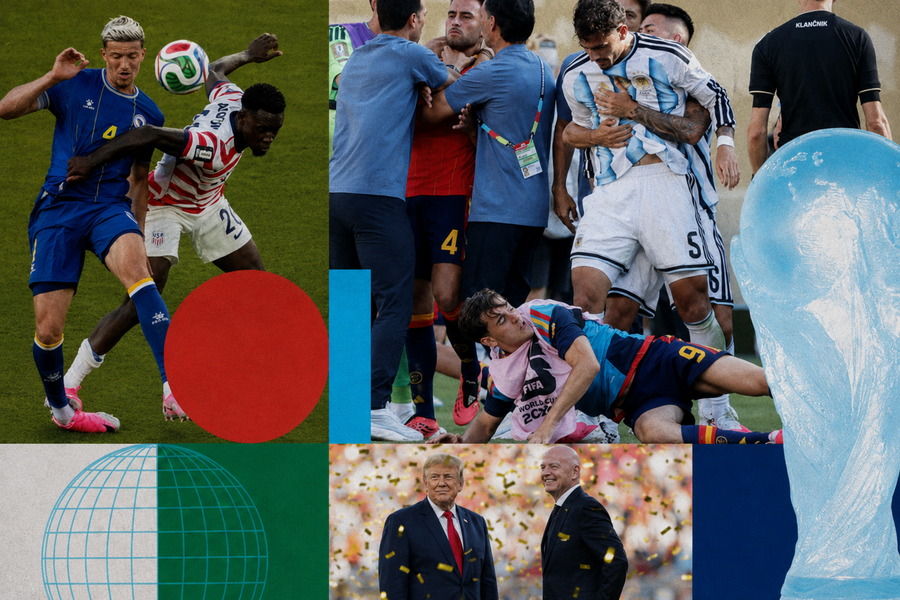
The final was a bleak, truly poor match. The right team won, in its now familiar, cold, emotionless manner, but the poor spectacle was a direct consequence of the tolerance shown to Argentina earlier in the tournament.
It is perhaps too early, while the shards of gold ribbons are still flying in the New Jersey sky, to make a proper assessment. That will only be possible when everything has been properly absorbed, when memories have had time to settle and take shape, when the consequences of certain events have become clear. However, let us try to make an assessment of where the World Cup that ended with Leandro Paredes clashing with Gavin ranks historically.
The Balogun affair could still have significant repercussions. For now, it seems like the world has moved on, but that is the nature of tournaments. They have their own momentum, a drive towards the final that tends to overshadow everything else. However, there is little doubt that bowing to political pressure, overriding 64 years of precedent to ensure that a particular player takes part on the biggest stage, as Gianni Infantino did with Cristiano Ronaldo and then manipulating the qualification criteria for the Club World Cup to guarantee Lionel Messi’s participation, constitutes a turning point.
Perhaps in the future we will accept as normal the idea that famous footballers receive special treatment because making money is more important than fairness or the good of the game. The priority of generating revenue was a prominent feature of the 2026 World Cup. Or perhaps this will strengthen opposition to Infantino. It is significant, for example, how many British politicians – and some American ones – have begun to criticize FIFA and its president.
An immediate consequence could be the expansion of the World Cup to 64 teams, as Infantino tries to strengthen his support base, especially after the damage that the immigration policies of the United States and Canada have done to his claim to be a protector of countries of the global south.
Other issues that have been obscured by the relentless flow of matches are sure to come back into focus. The treatment of Iran, for example, was scandalous and sets a worrying precedent. Ticket prices may be lower for the 2030 World Cup, but the idea that a significant portion of them should be available to ordinary fans, those who follow the championship football every week, is already dead. The World Cup is no longer a mass popular movement, but a luxury activity.
Edhe çmimi që paguajnë qytetet pritëse do të bëhet plotësisht i dukshëm vetëm me kalimin e kohës. Ky çmim është financiar, por edhe shoqëror. Në Shtetet e Bashkuara dhe Kanada janë kryer aksione për largimin e të pastrehëve nga rrugët, duke u marrë njerëzve me shumë pak mundësi edhe ato pak sende që zotëronin, dokumentet e identitetit dhe ilaçet. Në Meksikë, ndërkohë, ka pasur reagime të forta për nxjerrjen e ujit dhe dëmet mjedisore të lidhura me projektet e Kupës së Botës.
Gazeta italiane La Gazzetta dello Sport botoi të shtunën një analizë në dy faqe, ku e cilësonte Kupën e Botës një "katastrofë", duke renditur disa probleme madhore: çmimet e biletave, çështjen Balogun, motin, rritjen e numrit të ndeshjeve dhe uljen e kohës së pushimit për futbollistët. Ndoshta ky është një vlerësim i ekzagjeruar, por ajo që ndodhi më pas ishte vërtet katastrofike, pasi gazeta pa që numri i biletave të akorduara për finalen u reduktua nga pesë në vetëm dy.
Nuk është plotësisht e qartë nëse këto dy ngjarje lidhen mes tyre, por vetë ideja që një media mund të ndëshkohet me kufizim të aksesit vetëm pse refuzon narrativën zyrtare se ky ishte Botërori më i madh i historisë, është një vizion distopik.
Kjo përputhej me qëndrimin përgjithësisht përçmues të FIFA-s ndaj mediave gjatë këtij turneu. Ndonëse disa qytete pritëse, veçanërisht Houstoni dhe Atlanta, u përpoqën maksimalisht të ishin mikpritëse, organizimi bazë dhe kushtet e punës ishin më të dobëtat që prej të paktën gjashtë Kupave të Botës.
Natyrisht, askujt në botën reale nuk i intereson nëse gazetarët kanë apo jo internet që funksionon, por kjo është tregues i një qasjeje shumë më të gjerë: tifozët shihen si burime të ardhurash që duhet të shfrytëzohen pa mëshirë, ndërsa mediat si një bezdi e padëshiruar.
Sa i përket futbollit, ai ishte i mirë, por jo i jashtëzakonshëm. Pati një sërë ndeshjesh cilësore dhe dramatike, Brazili kundër Japonisë, Maroku kundër Holandës, Anglia kundër Meksikës, Argjentina kundër Kepit të Gjelbër, Norvegjia kundër Bregut të Fildishtë, Belgjika kundër Senegalit, Norvegjia kundër Brazilit dhe Argjentina kundër Egjiptit – por fatkeqësisht pothuajse të gjitha u zhvilluan në fazën e 1/16-ve ose të 1/8-ve të finales.
Çerekfinalet nuk ishin veçanërisht frymëzuese. Fitorja e Argjentinës ndaj Anglisë në gjysmëfinale ishte emocionuese dhe përfshiu një kolaps që do të diskutohet për vite me radhë, por triumfi i Spanjës ndaj Francës ishte pothuajse tepër i lehtë. Spanja krijoi shumë shpejt një epërsi të qartë ndaj francezëve, e cila nuk u vu kurrë seriozisht në diskutim.
Dhe finalja ishte e zymtë, një ndeshje vërtet e dobët. Fitoi skuadra e duhur, në mënyrën e saj tashmë të njohur, të ftohtë dhe pa shumë emocione, por spektakli i varfër ishte një pasojë e drejtpërdrejtë e tolerancës që iu tregua Argjentinës më herët gjatë turneut.
The ending inevitably influences how everything that came before is remembered and ranks this World Cup after those of 2022 and 2018, not to mention the glorious World Cups of the 1980s or 1998.
History will decide exactly where in the middle this tournament will rank, whether it will be higher or lower than the 2014 and 2006 World Cups. It was not a great World Cup, but it was a good tournament and, beyond FIFA's bragging rights, that is more than enough. /Adapted from "Pamphlet" by "The Guardian"




Lini një Përgjigje