


 Shkruar nga Diplomatico | Pamfleti.net
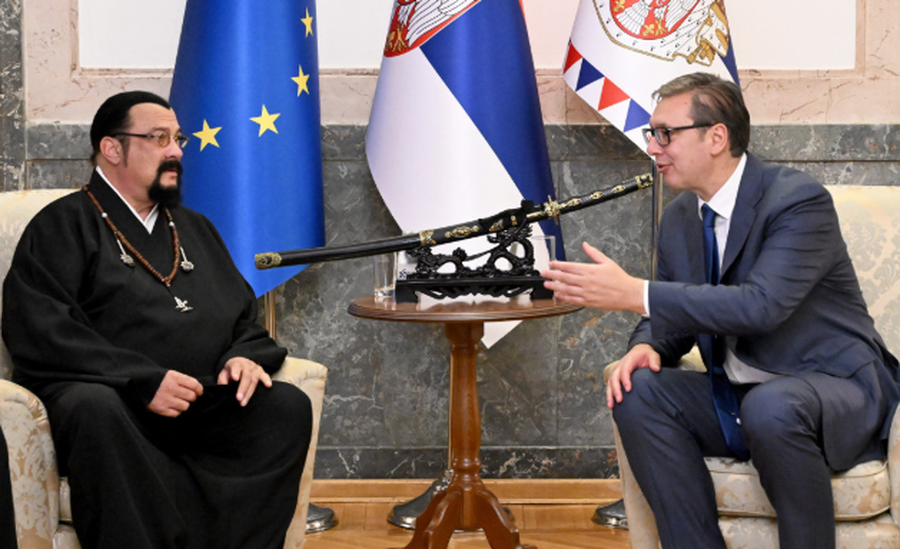
Vučić uses the army for spectacle while major allies are absent; what does this mean for the Balkans and Albania?
In 2014, Belgrade hosted Vladimir Putin in a grand military parade that symbolized strong Russian-Serbian ties and a clear message to the West. But a decade later, instead of powerful international leaders, the most recent parade in Serbia was led by Hollywood actor Steven Seagal, a figure more folkloric than political.
Instead of heads of state, the guest list included defense ministers from countries on the periphery of global politics and a general from China, while the absence of important voices from the EU, the US, or Russia speaks clearly: Serbia is no longer serving as a support point for the great powers, but is turning into an arena for domestic political spectacle.

In the face of massive protests and an increasingly vocal opposition, Aleksandar Vučić is using the army not for national security, but to fuel the regime's propaganda and keep alive the idea of "the encirclement of Serbia by enemies."
This is a clear signal for the region as well: an isolated Serbia, which avoids confronting democracy and tries to compensate for the diplomatic vacuum with military parades, is more dangerous than an internationally engaged Serbia.
For Albania, this is a wake-up call. A Serbia that is moving away from the West and trying to revive nationalist sentiments through propaganda and militarization is a destabilizing factor in the Balkans. The increased military presence on the border with Kosovo, investments in armaments and the accompanying rhetoric of war show that Belgrade is choosing internal confrontation over regional integration.
In the absence of Putin, Seagal may be a showman, but he is no strategic ally. And in the absence of real allies, every regime falls prey to its own self-fantasy./ Pamphlet


Lini një Përgjigje