


 Shkruar nga Nicola Berti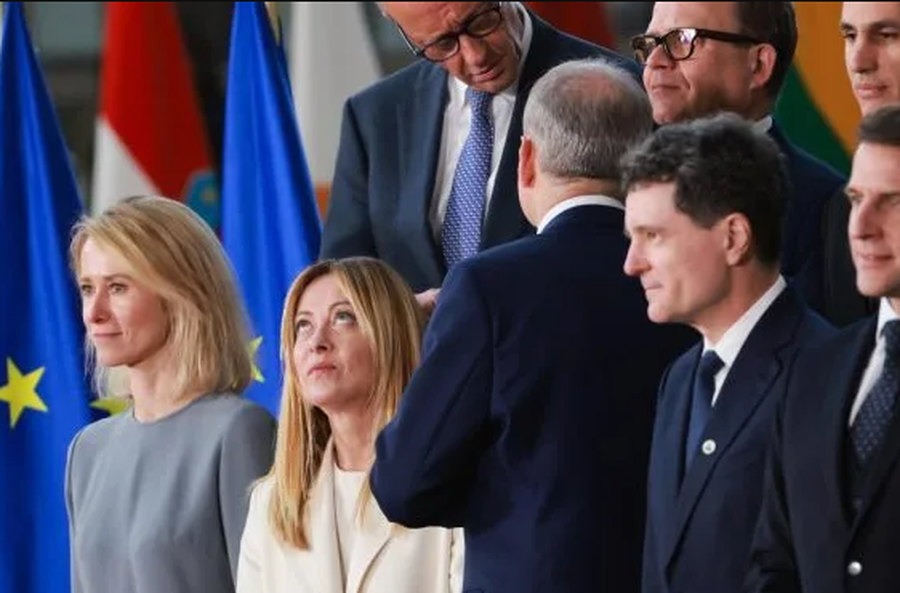
The recent NATO summit in Ankara brought back a fundamental question about the future of the continent: is Europe still a geopolitical actor, or has it become an object of decisions by other powers? As after the two world wars of the 20th century, the continent risks emerging once again weakened by a conflict that is reshaping global balances...
The Third World War is ending and it is obvious that Europe is losing it. Just as it emerged defeated - even destroyed - from the two wars of the last century. Of course, with one difference: in those wars the Old Continent had been the author, not just their stage.
He had been a protagonist until his final suicide. That is, until his historic surrender in the face of two new powers outside Europe, the United States and the Soviet Union.
Just 30 years ago, Europe was the seemingly eternal master of the global order. Today - more than 80 years after 1945 - Europe is confirmed as a geopolitical object, not a subject. The NATO summit made this clear again, starting from its very place of development, Ankara, the capital of an Islamized democracy in the Middle East.
And not far from Yalta - the city of Ukrainian Crimea, today occupied again by Russia - where the post-World War II European balances were established, which were ultimately destroyed with Moscow's aggression against Ukraine.
By this logic, Vladimir Putin has already lost his bet on Russia's neo-imperial return after the collapse of the Soviet Union. Stalin once won his bet: after resisting Nazi Germany's aggression, he occupied Berlin and forced Hitler to kill himself.
But the price of that victory - above all, some 40 million dead, military and civilian - was not much different from the one Putin has imposed on post-Soviet Russia over the past four years and ultimately for not winning in Ukraine.
Exactly where, in the summer of 1943, the Red Army gained momentum after the Stalingrad turn. Two very different dictators, Stalin and Putin. The former a Transcaucasian autocrat, with almost Tartar features. Putin, a Baltic European, heir in the direct line of Peter and Catherine in St. Petersburg.
But both neo-tsarists. The former kept Ukraine under Moscow's iron fist after the Leninist revolution. The latter never accepted that Kiev - where, according to Russian historical mythology, Holy Russia was born - would become a Western outpost after the fall of the walls.
He has never given up on the idea of reversing the regime change that, according to him, the US imposed on Ukraine with the Orange Revolution of 2014 and the first "Western" war against Russia. In this way, Ukraine became a kind of "plan B" to an idea from the beginning of the century, when Putin had just come to the Kremlin: that Russia, after joining the G8, should also join NATO.
It was the era of the "end of history", and therefore the end of wars (at least between East and West on both sides of the Atlantic). This scenario was finally overturned. By Putin, but not only by him and long before 2022.
It is now becoming less unlikely that Ukraine will join NATO. It is a country with a political and economic structure that is still largely Soviet. A democracy run by oligarchs and security apparatuses: even more tribal than Russian centralism, which is now showing signs of weakening.
Instead of a Russia supervised from within by NATO itself, there would be - or will be - a Ukraine very similar to Russia: a weapons factory-warehouse, a military state financed (by force) by Europe, within an expanded NATO - also towards Asia against China - and paid for less and less by the American taxpayer.
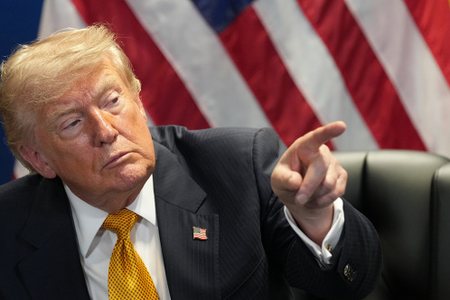
This is the exit strategy that Donald Trump, a former casino manager and Manhattan real estate tycoon, a Wall Street man, seems to be heading towards. His opportunistic pragmatism, changing from day to day, is bringing him closer to his predecessor Joe Biden.
The latter - pragmatically and opportunistically - had decided that Ukraine should "arm and go" into a bloody war, which would stop the Kremlin's adventure at the front line.
Even Franklin Roosevelt, in 1940, was re-elected for a third time to the White House by promising Americans - still recovering from the Great Depression - that he would keep the country out of a new European war, while financing Great Britain to the maximum.
Just a year later, after being attacked at Pearl Harbor, FDR entered the war with Japan. And it took another year for Washington to declare war on Germany. This at a time when the “liberation” of Europe had already been decided by the American political elite across the Atlantic, in a new game of geopolitical “cooperation-rivalry” with Moscow.
When Great Britain and France sat down at the victors' table in 1945, it already seemed like a historical falsification. London immediately lost its entire colonial empire, and so did Paris, even though the latter believed it could play the role of leader of a new, gradually uniting Europe.
But Germany's long-term recovery - culminating in the 1990 reunification - and incurable French nationalism only reinforced the long-term logic of the Atlantic Pact: to keep the US "in Europe"; the Soviet Union "out"; and Germany "down."
Sado ambicioz që mund të ketë qenë në projektin e tij dhe në shumë prej arritjeve të tij, Bashkimi Evropian nuk ka qenë veçse një zëvendësues. Brexit, hyrje-dalja oportuniste e Mbretërisë së Bashkuar përtej La Manshit - dhe shfaqja e fundit e “vullnetarëve” të Londrës dhe Parisit, vetëm sa e kanë konfirmuar këtë.
Nëse ka pasur diçka që në retrospektivë duket si pjesë e një “Loje të Madhe” të drejtuar nga jashtë Evropës, ajo ishte zgjerimi i Bashkimit Evropian drejt Lindjes në kapërcyell të mijëvjeçarit. Ishte një projekt i lidhur me Amerikën “demokrate” të Bill Clinton-it dhe më pas të Barack Obama-s dhe Joe Biden-it.
Por në Luftën e Tretë Botërore, ajo që është sakrifikuar para së gjithash ka qenë popullsia ukrainase: me qindra mijëra të vrarë, qytete të shkatërruara dhe miliona refugjatë. Por gjithçka në dukje ka ardhur si rezultat i vendimit të një qeverie sovrane dhe formalisht demokratike.
Qindra apo mijëra miliardë të humbura nga inflacioni në sektorin energjetik dhe recesioni i shkaktuar nga sanksionet - përpara se të llogariten ndihmat financiare dhe ushtarake të drejtpërdrejta për Kievin - janë paguar nga Evropa, e cila tani po detyrohet të pranojë Ukrainën: një hap që në realitet rrezikon të jetë shkatërrues për Bashkimin Evropian të lindur mbi rrënojat e Luftës së Dytë Botërore.
Volodymyr Zelensky, ose ndonjë gjeneral që tashmë ka hyrë në garën për zgjedhjet e ardhshme presidenciale, do të ulet në Bruksel jo si një aleat përjetësisht mirënjohës, një nxënës i qytetërimit evropian.
Ai do të luajë rolin e “vëllait të madh”, menaxherit pa alternativë të një mbrojtjeje evropiane që nuk është ndërtuar kurrë dhe që me gjasë, nuk do të ndërtohet as si e tillë.
Bashkimi Evropian do të vazhdojë të paguajë Kievin për mbrojtjen nga ekspansionizmi rus, real apo i supozuar; me Putinin në pushtet ose me shumë gjasa, me një pasardhës të tij.
Rregullat e lojës do të vazhdojnë të vendosen në Uashington: nga pasardhës të Trump-it, për të cilët do të ishte një iluzion i rrezikshëm të mendohej se duan ta kthejnë filmin e historisë pas, drejt “Botës së Djeshme”.
Gjithmonë duke pranuar se globalizimi financiar ka prodhuar ndonjë bilanc pozitiv të përbashkët për 450 milionë evropianë. Ndërkohë, në Britaninë e Madhe duket se ka ardhur në fund të rrugës bipolarizmi politik që për tre shekuj ka shërbyer si baza e demokracisë liberale moderne kudo (mbi të gjitha në SHBA-në e 250-vjetorit).
Ndoshta pas lëvizjeve të qeverisë laburiste ndonjë përfitim do ta ketë aparati ushtarako-industrial i Kompanisë së Indive: trashëgimtarët e marshallit Montgomery apo të James Bond-it. Ose bankierët e City-t, të cilët mezi presin të rikthehen në Bashkimin Evropian dhe me të njëjtat pritshmëri.
Semi-presidential France, the last heir to a strong nation-state, though still capable of “revolution,” seems no less disoriented. Germany is no better off, once again threatened by many of its own internal demons, while facing an ever-shrinking coalition between Christian Democrats and Social Democrats.
So Europe has once again lost the world war. Although this time it may never have really fought it; it never made the big decisions that determined its fate, nor was it part of the great historical turning points.
However, the biggest mistake would be to refuse to face this reality, however difficult or illusory it may be. In 1945, the defeat was too heavy, too devastating, and too painful.
Its consequences were clear to everyone: to the British and French, victors only in appearance; to the Germans and Italians, divided in various ways; to the Poles, Hungarians, Czechs, Slovaks and others, imprisoned for 40 years.
But the European reconstruction - the one that was possible and that was actually achieved, like the economic and monetary union - started precisely from there. History - despite what the politically correct theorists of the campuses across the Atlantic proclaimed 30 years ago - never ends. / Pamphlet from "Il Sussidiario"



Lini një Përgjigje