


 Shkruar nga Pamfleti
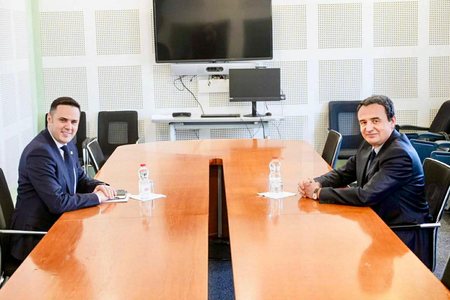
In Kosovo, negotiations between Prime Minister Albin Kurti and LDK leader Lumir Abdixhiku on the election of a new President are expected to resume, while politics has entered a critical phase, with few days available to find a solution that will avoid early elections.
Reports indicate that the Kurti-Abdixhiku negotiations are expected to take place in the Kosovo Assembly, thus marking a new round of talks, although so far there is no agreement that would avert the crisis.
The Constitutional Court set April 28 as the deadline for electing the President; otherwise, within 45 days, Kosovo will go to early elections, which could deepen political uncertainty and cause prolonged institutional instability.
Glauk Konjufca, one of the candidates proposed by Kurti's VV for President, has expressed his willingness to withdraw from the race if a consensus is reached on a name that can receive the support of the opposition parties. On the other hand, Arbër Rexhaj, a Vetëvendosje MP, announced discussions on specific names of candidates, to accelerate the process in the coming days. The negotiations so far between Kurti and Abdixhiku, according to official statements, have focused on the criteria that a candidate should have, but without going into specific names. So between the two political leaders, one in the government and the other in the opposition, there has been a discussion on principles, while the final deadline set by the Constitution is approaching without finding a solution.
What is striking is the fact that so far Kurti has only included LDK in the negotiations, while PDK has raised concerns that it has not received an official invitation from the Prime Minister to start talks.
A day earlier, acting President Albulena Haxhiu urged political forces to reach an agreement, arguing that, if there is political will, an agreement could be reached “within hours.” At the same time, she warned against taking the country to another election, citing both voter fatigue and domestic and international challenges that require political stability.
A similar position has been held by Lutfi Haziri of LDK, according to whom negotiations with VV aim to preserve institutional functionality and prevent a deeper political crisis.
But, from what we can see, at least so far, it has to do with the deep distrust between the parties to find an agreement. VV aims to maintain its control, thus using the number of deputies it has in the Assembly as the main force, PDK in the opposition focuses attention on the procedural side of the talks, while LDK emphasizes the predetermination of criteria.
All of this brings the parties closer to not finding a solution, rather than reaching an agreement that would avoid the crisis and lead the country towards early elections.
With only 8 days left until the deadline for electing a President, there are still no names on the table that can unite the parties in a consensus. The way the political parties will behave until the deadline will show how capable the political system in Kosovo is to function under pressure, how well it can manage political divisions, and how willing the parties in the process will be to reach an agreement.
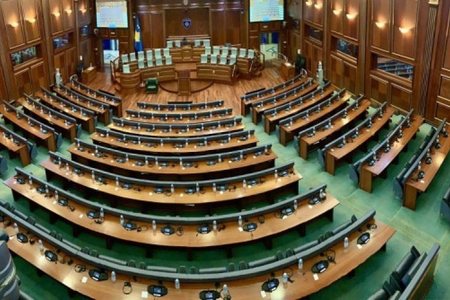
To elect the President, a quorum of 80 MPs must be reached in the Parliament hall, which means that if Kurti's VV and LDK's Abdixhiku reach an agreement, then in terms of the number of mandates the figure goes to 81. In the first two rounds of voting, which were burned on the procedural side, the opposition boycotted the session, failing to reach the magic number of 80 MPs, which means that if there is no agreement during this week, then early elections are certain. /Pamphlet/




Lini një Përgjigje