


 Shkruar nga Pamfleti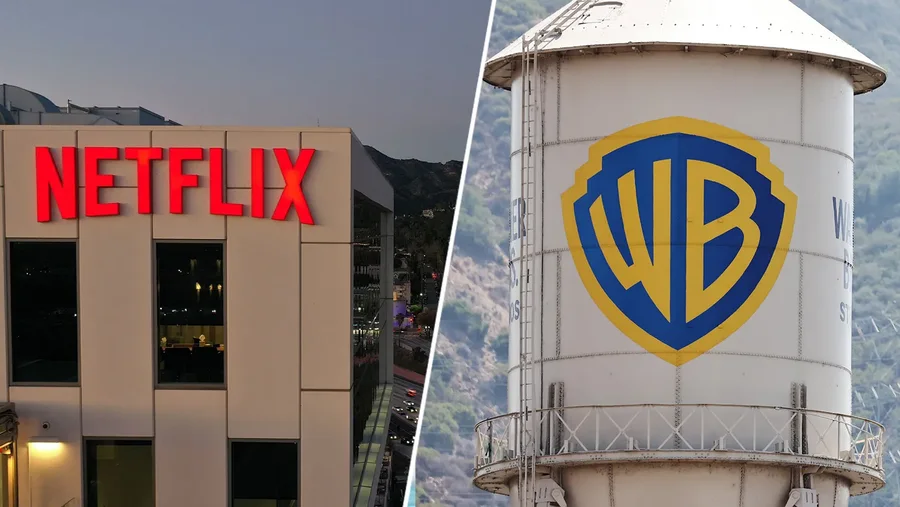
Netflix has agreed to buy Warner Bros. Discovery's film and streaming businesses for $72 billion, a major Hollywood deal. The streaming giant emerged as the highest bidder for Warner Bros., ahead of rivals Comcast and Paramount Skydance, after a protracted battle.
Warner Bros. owns franchises including Harry Potter and Game of Thrones, as well as the HBO Max streaming service. The acquisition is expected to create a new entertainment giant, but the deal will still need to be approved by competition authorities. Netflix co-chief executive Ted Sarandos said the broadcaster was “very confident” it would get the regulatory approval it needed and was working “full speed ahead” to do so.
He said that by combining Warner Bros.' library of TV shows and movies with streaming platform series like Stranger Things, we can give audiences more of what they want and help define the next century of storytelling.
"Warner Bros. has defined the past century of entertainment, and together we can define the next ," he said.
Netflix estimates it will find $2 billion to $3 billion in savings, largely by eliminating overlaps in the support and technology areas of the businesses. Movies produced by Warner Bros. will continue to be released in theaters, it said, and Warner Bros.' television studio will continue to be able to produce for third parties. Netflix will continue to produce content exclusively for its platform.
Calling it a "big day" for the companies, Sarandos acknowledged that the acquisition may have surprised some shareholders, but was a "rare opportunity" to set Netflix up for success "for decades to come."
David Zaslav, president and CEO of Warner Bros., added that the deal would bring together "two of the greatest storytelling companies in the world."
"By joining forces with Netflix, we will ensure that people everywhere continue to enjoy the world's most resonant stories for generations to come ," he said.
The cash-and-stock deal is worth $27.75 per Warner Bros. share, with a total enterprise value, which includes the company's debt and the value of its stock, of about $82.7 billion. The equity value, or cash price, is $72 billion.
The boards of directors of each company unanimously approved the deal. Michael O'Leary, chief executive of trade body Cinema United, said the merger posed "an unprecedented threat" to the global cinema business.
"The negative impact of this acquisition will affect movie theaters, from the largest circuits to independent single-screen theaters in small towns in the United States and around the world ," he said.
Netflix will complete the acquisition after Warner Bros. finalizes its previously announced plans to split its streaming and studios division from its global networks division into two companies next year.
Its global networks division will become Discovery Global and will include its cable channels like CNN and TNT Sports in the US, as well as Discovery and free channels in Europe. However, TNT Sports International will remain with the broadcasting and studio division that was sold to Netflix.
Hollywood Shakeup
Paolo Pescatore, founder and technology media and telecommunications analyst at PP Foresight, said the sale was "a major statement of intent and underscores Netflix's aspirations to become a global leader in the new world streaming order."
But he warned that, while the "surprising move" made sense for Warner Bros., it could "provide a headache for Netflix" when trying to merge the companies given the size of the deal.
While the agreed deal is for a portion of Warner Bros.' business, rival Paramount had submitted a bid to buy the entire company, including its cable networks, in October. Warner Bros. rejected the move before it was put up for sale.
Before the deal was announced, Tom Harrington, head of television at Enders Analysis, said it was difficult to predict whether the acquisition would be approved by regulators, but if it were approved, it would have a major impact on cinemas.
"If it passed, it would reorient Hollywood, " he said.
Harrington said there would likely be "major cuts" to television and film production by a newly merged company, which would lead to resistance to the move from parts of Hollywood and related unions. For consumers, Harrington said a merger would likely lead to higher prices.
Danni Hewson, head of financial analysis at AJ Bell, said Netflix had "offered an olive branch" to Hollywood with the promise that it would continue to stream Warner Bros. films on the big screen.







Lini një Përgjigje