


 Shkruar nga Ylli Pata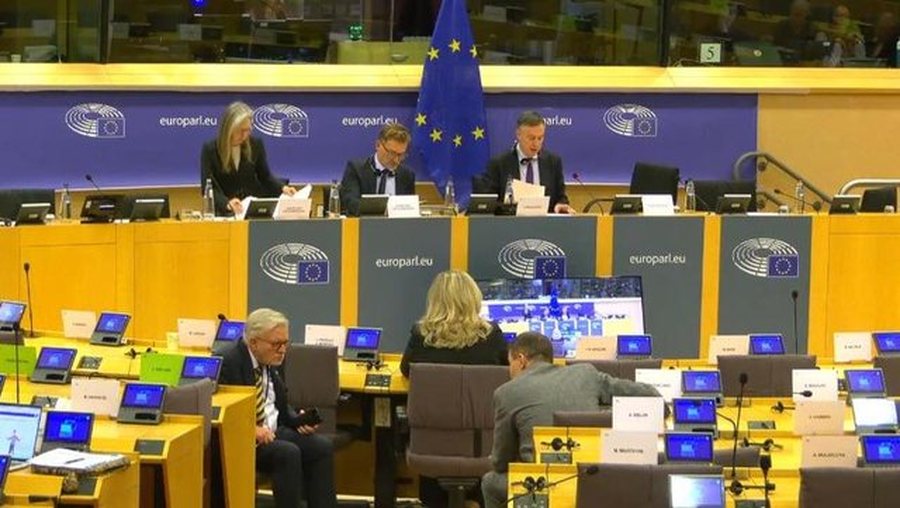
The MEPs of the Foreign Affairs Committee, who are "employed" to monitor candidate countries, have not only supported the European Commission's positive decision on Albania, but have also added other words that can be considered a purely political stance.
It seemed from the beginning that the issue of "blocking" Albania's EU candidacy, as sold since January after the failure of the "Ramaduro" thesis, was at least an uncertain thesis.
To use it to keep the "cause of the day" high, but as it turned out today in the European Parliament, the predicted resistance did not happen.
The MEPs of the Foreign Affairs Committee, who are "employed" to monitor candidate countries, have not only supported the European Commission's positive decision on Albania, but have also added other words that can be considered a purely political stance.
Meanwhile, the story of the 300 amendments that naturally came with strong lobbying pushed by people close to Sali Berisha dissolved like salt in water, with none being accepted.
But what has happened when we are dealing with an institution such as the European Parliament, where the majority of its working bodies, in this case the committees, belong to the European People's Parties, namely the DP's allies. Where the opportunity to raise a concern, to find a space to be heard, is not only present but unlimited?
Of course, politics in the European Parliament works in a way where all groups, whether political or national, say what they think, and in the end a modus vivendi is reached regarding the documents.
And in the final position, there is always a golden mean that is coordinated with the information coming from the European Commission, which in turn receives data from the EU embassy in Tirana.
It is clear that there was never any surprise from relevant authorities such as the head of the Commission, David McAllister, who knows Sali Berisha inside out. This situation has always been there, but in the end, there was a document that established a kind of balance, where the government is warned and the opposition's concerns are given a voice.
But with what happened today, this was not done. It is not simply a support for the government as someone might sell it. But clearly a clearly defined political stance for Albania's objective in the EU.
If until yesterday, there could be bipartisan positions of the Parliament regarding certain issues, today the accession file seems to require a clearer position: either Albania is supported in this case, or it is obstructed. As has happened with Serbia all these years or even other countries. The European Parliament with 57 votes has decided yes to the accession. And this is a political position, which of course has its own impetuses and causes. The impetuses are the countries that move the EU; Germany, France, Italy, the Netherlands, Scandinavian countries, etc., but also the lack of a blockade from countries that do not look favorably on Tirana's leadership. But, in this case, lobbying comes in, where the aim is to smooth out the problems, because the final objective is important from the decision-making centers.
Causes: There is no doubt that what has accelerated everything is the political will of the majority for justice reform, by granting the EU "sovereignty", through the IMO, which is in the Constitution.
This "sovereignty" is in a way also the test that Croatia, Romania, Bulgaria or other countries before us have passed before entering the EU. Sovereignty that in reality has brought a big problem to Albania, how can the justice reform number 2 be done. Which, if one has the nerve and political courage, one can do quite simply and without problems as in the first case. After all the energy spent against it, not only have the scenarios been burned, but a complete experiment has been carried out, which in all likelihood will lead to endless studies being published.



Lini një Përgjigje