


 Shkruar nga M. Gessen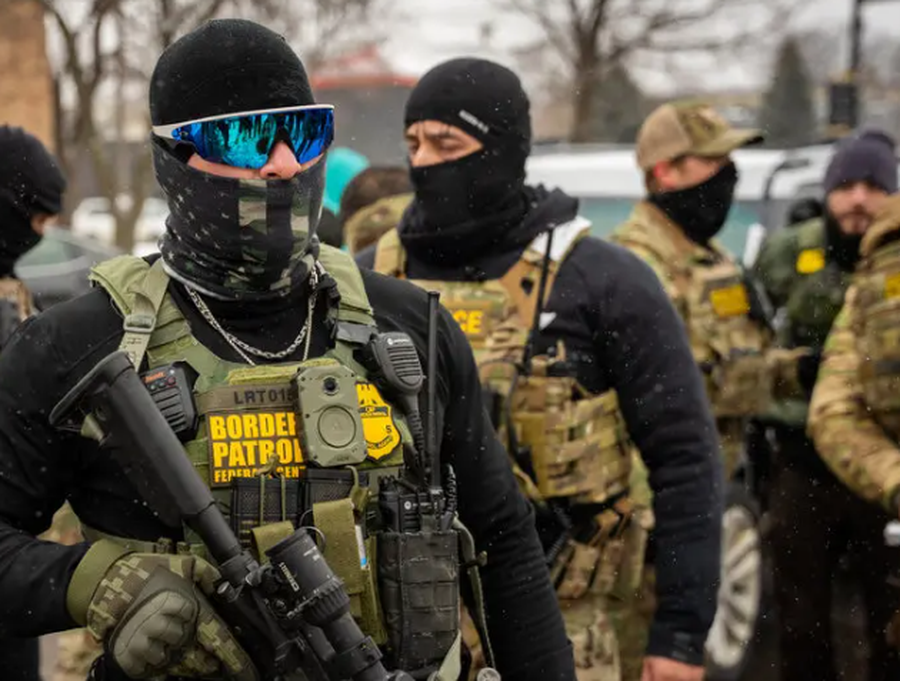
It is natural for our brains to try to find logic in what we are seeing. There is a logic, and this logic has a name. It is called state terror...
After the past three weeks of brutality in Minneapolis, it should no longer be possible to say that the Trump administration seeks simply to govern this nation. It seeks to reduce us all to a state of constant fear, a fear of violence from which some people may be spared for a moment but from which no one will ever be truly safe. This is our new national reality.
State terror has arrived.
Since early January, when Immigration and Customs Enforcement expanded its operation to Minneapolis and St. Paul, Minn., federal officers have killed Renee Good, threatened a pregnant immigration lawyer in her firm’s parking lot; detained multiple U.S. citizens, including one who was dragged out of his home in his underwear; smashed car windows and detained their passengers, including a U.S. citizen who was on her way to a medical appointment at a traumatic brain injury center; placed crowd control grenades and a tear gas canister near a car carrying six children, including a 6-month-old; searched an airport, demanding to see people’s documents and arresting more than a dozen who worked there; detained a 5-year-old. And now they’ve killed another U.S. citizen, Alex Jeffrey Pretti, an intensive care unit nurse with no criminal record. The agents had him lying on the ground, subdued, before shooting him at least 10 times at close range.
Faced with a list like this, we look for details that might explain why these people were subjected to this treatment, details that might reassure us that we, on the other hand, are not in danger.
ChongLy Thao, the man who was dragged from his home in his underwear, is an immigrant from Laos; he is not white, and he appears to speak with an accent. The woman who was on her way to a medical appointment and her family of six children drove through areas where anti-ICE protests were taking place.
The 5-year-old's family has no permanent status. Little is known about Pretti at the time of writing, but his father said he participated in the protests and may have carried a gun (legally).
We do not focus on these details to justify the actions of federal agents, which are simply brutal and unjustifiable.
Nëse nuk përgjigjemi, nëse ndryshojmë rrugët tona për të shmangur protestat, nëse jemi mjaft me fat që të jemi amerikanë të bardhë, heteroseksualë, të lindur natyrshëm ose, nëse nuk jemi, por qëndrojmë të qetë, të heshtim, do të jemi të sigurt. Anasjelltas, ne mund të zgjedhim të flasim, të shkojmë në protesta, të marrim një rrezik. Sidoqoftë, ne i themi vetes, nëse mund të parashikojmë pasojat, ne kemi liri veprimi.
Por terrori shtetëror nuk funksionon kështu.
Në vitet 1990, kur flisja me njerëz në ish-Bashkimin Sovjetik rreth përvojave të familjeve të tyre me terrorin stalinist, më bënte përshtypje vazhdimisht se sa shumë dukej se dinin njerëzit për rrethanat e tyre. Herë pas here, njerëzit më tregonin saktësisht se çfarë kishte çuar në arrestimet ose ekzekutimet e anëtarëve të familjeve të tyre. Fqinjët xhelozë i kishin raportuar tek autoritetet, ose kolegët që ishin arrestuar i kishin përmendur nën presion. Këto histori ishin transmetuar brez pas brezi. Si mund të dinin kaq shumë, pyesja veten. Njerëzit krijuan rrëfime nga dyshimet, thashethemet dhe aludimet, për të plotësuar një nevojë të dëshpëruar për një shpjegim.
Libri im i preferuar për terrorin shtetëror është "Sofia Petrovna" e Lydia Chukovskaya-s, një roman i shkurtër rus që është përkthyer në anglisht. Protagonistja, një grua në moshë të mesme besnike ndaj Partisë Komuniste të Stalinit, humbet mendjen duke u përpjekur t'i japë kuptim arrestimit të djalit të saj. Historia ime familjare përmban një pasojë. Pasi policia sekrete arrestoi shumicën e stafit të lartë në gazetën ku gjyshi im ishte zëvendësredaktor, ai priti trokitjen në derën e tij. Kur policia sekrete nuk u shfaq natë pas nate, javë pas jave, ai u shqetësua aq shumë sa u shtrua në një institucion psikiatrik. Ndoshta kështu i shpëtoi arrestimit, ose shpëtoi sepse policia sekrete e kishte përmbushur kuotën e saj të arrestimeve për atë muaj.
Sepse ky ishte sekreti për policinë sekrete që u bë i qartë kur arkivat e KGB-së u hapën (shkurt) në vitet 1990: ata drejtoheshin nga kuotat. Skuadronet lokale duhej të arrestonin një numër të caktuar qytetarësh në mënyrë që ata të mund të shpalleshin armiq të popullit.
Që oficerët shpesh kapnin grupe kolegësh, miqsh dhe anëtarësh të familjes ishte ndoshta një çështje komoditeti më shumë se çdo gjë tjetër. Në thelb, terrori ishte i rastësishëm. Në fakt, kështu funksionon terrori shtetëror.
Coincidence is the difference between a regime based on terror and one that is simply repressive. Even in brutally repressive regimes, including those in the Soviet colonies in Eastern Europe, one knew where the boundaries of acceptable behavior lay. Open protest would get you arrested; kitchen talk would not. Writing subversive essays or novels or editing clandestine magazines would get you arrested; reading these forbidden works and passing them on quietly to friends probably would not. A regime based on terror, on the other hand, uses violence precisely to reinforce the message that anyone can submit to it.
When we think of past terrorist regimes, it is tempting to superimpose a logical narrative on them, as if totalitarian leaders had a list of extermination tasks and worked through them methodically. This is, I think, how most people understand Martin Niemöller's classic poem "First They Came." In reality, however, the people living under those regimes never knew which group of people would be declared enemies of the state next.
In Niemöller’s time, terror was carried out by secret police and paramilitary forces, especially the SA, better known as the “Brownshirts,” whose job it was to instill fear in the population. In 1934, Adolf Hitler arrested an estimated 150 to 200 members of the SA leadership and executed its top generals in the ultimate demonstration that no one was immune to the deadly violence of the state. Stalin regularly carried out similar purges. Terror itself was not the ultimate goal of those regimes, but nothing that followed would have been possible without it.
The toolbox is not particularly diverse.
President Trump is using all the tools: the reported quotas for ICE arrests; the paramilitary force made up of thugs intoxicated by their brutality; the spectacle of random violence, especially on city streets; the posthumous defamation of victims.
It's natural for our brains to try to find logic in what we're seeing. There is a logic, and this logic has a name.
It's called state terror. /Adapted from the New York Times/



Lini një Përgjigje