


 Shkruar nga Diplomatico | Pamfleti.net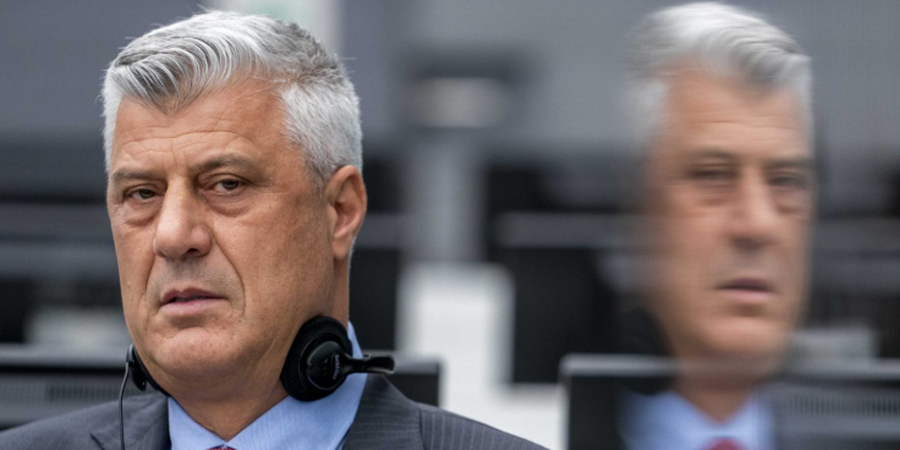
The KLA trial as a geopolitical war, why Thaçi's fate is not simply a matter of justice
From political arrest to demands for extreme sentences, the Special Court becomes an arena of clashes between the US, the EU and Germany over Ukraine, the Balkans and post-war borders.
The arrest and detention of Hashim Thaçi and the leaders of the KLA do not represent just a criminal trial, but a development with heavy political and geopolitical weight. The indictment built largely on Serbian materials and the request for sentences of up to 45 years in prison mark an attempt to condemn the liberation war itself as a criminal act. In the background, the US-Germany clash, the role of the Trump administration and possible negotiations with Russia on Ukraine and the Balkans transform the Thaçi case into part of a much larger bargain. The final decision will not only be legal, but political, with profound consequences for Kosovo, the region and the historical narrative of the KLA war.
Since the arrest of Hashim Thaçi and other KLA leaders, the treatment of this issue by the public in Tirana and Pristina has been either emotional or instrumentalized for political gain.
In reality, the flagrant and harsh arrest was nothing more than a political response, a punishment for the actions that Hashim Thaçi had taken at the moment when criminal prosecution against him and the leaders of the KLA was being prepared.
It was known that the trial phase would begin. Even Hashim Thaçi himself knew this, as he publicly acknowledged it at international meetings and agreed to the establishment of the Special Court.
Hashim Thaçi, and this is not a conspiracy theory but a public fact, decided to oppose this accepted pact and cooperate with the Trump administration, in an effort that brought about the great US-Germany rift.
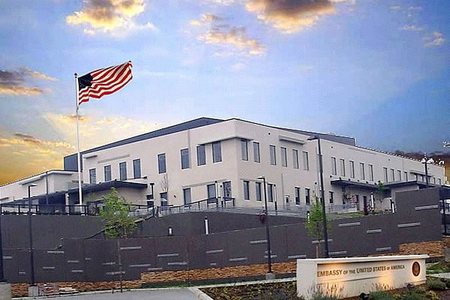
In 2019, Hashim Thaçi demonstratively left the meeting with Angela Merkel at the German Chancellery and immediately went to the US Embassy in Berlin, where he met Richard Grenell.
Just a month later, the German Chancellor declared Grenell persona non grata and expelled him from the country. Grenell and Thaçi joined forces in a strong move that Donald Trump intended to implement outside the framework of the relationship with the EU for the Kosovo-Serbia agreement, while Thaçi received the promise that, in exchange, the Special Court would be closed.
This is precisely why Hashim Thaçi was harshly arrested as he was leaving for Washington. An arrest that, according to political analysis, was ordered by Germany, which finances not only the Special Court, but also other structures in Kosovo and Bosnia, and had the approval of the structures of the US Department of State and Justice, or the so-called "deep state", which were not in line with Trump.
This was also articulated by one of Hashim Thaçi's closest associates, Baton Haxhiu, who reacted harshly against Angela Merkel immediately after the arrest of the former president of Kosovo.
Keeping Hashim Thaçi in detention for such a long time was justified, as stated in the indictment, with the claim that if released he would obstruct justice or threaten witnesses.
Meanwhile, the request for sentences of up to 45 years in prison for each of the KLA leaders poses a much greater risk than the first phase of the process.
The indictment is focused almost 90% on materials produced by Serbia, namely by the Serbian secret service and police, which accuse Hashim Thaçi and others of killing Serbian police or military personnel during the armed resistance of the Kosovo Liberation Army.
Essentially, today the Special Court is seeking a maximum sentence for the KLA as a military organization, which has been known and allied primarily with the US, the State Department, the CIA, and the Pentagon.
Frankly speaking, the KLA is being demanded to be punished for acts of war committed during the war, which constitutes a major political and historical crisis, which conceals a very serious danger.
In this context, the European sponsors of the Special Court appear to be communicating remotely with the US, namely with Donald Trump, who is seen as willing to negotiate with Russia on the Balkans.
Germany, France and other European powers appear to be playing hardball, signaling that they are ready to block any territorial exchange scenario, from Crimea and Donbass to the Balkans.
In fact, the message to Donald Trump and Vladimir Putin is that, if Kosovo is used as an alibi for the partition of Ukraine, Germany is ready to return the game to ground zero, returning the discussion to 1998 and the KLA war.
From this perspective, the punishment of KLA leaders is seen as part of this warning.
Today, the ball is in the court of the Trump administration, which is the only one that can really influence the rescue of Hashim Thaçi, through a broader agreement with the EU on Ukraine and the Balkans.
If this does not happen, Hashim Thaçi's fate risks turning into not only a personal tragedy, but an event that could turn back time for Albanians./ Pamphlet



Besoj qe nje koke turku nuk i kuzhton gje Trump
evropa k...rv e do bomben atomike mu mes shaleve te shkerd....ehet e gjitha. kontinet mut der ne palc. hakun e shqiptareve do e marri azia me usa ne kete evrop shker ...at