


 Shkruar nga Gjergj Zefi
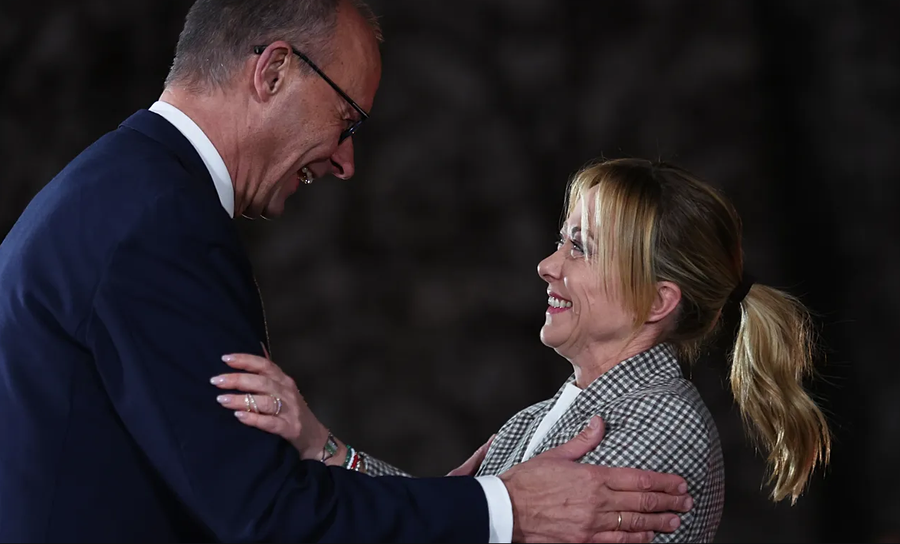
The Italian-German axis pushes for a less bureaucratic and more political European Union, reformatting the internal balances of power and the strategic vision of European integration...
Silently, but with strategic weight, the Rome-Berlin axis is articulating one of the most fundamental debates of the European Union of the last decade: has the time come for a Europe that is more politically simplified, less bureaucratic and more member-state-led? The latest initiative by Italy and Germany, clearly reflected in the Italian and German public debate, is not a technical regulatory episode, but a political signal about how two key states see the future of the European Union.
The essence of this vision is simple in formulation, but complex in implementation: a Europe that produces fewer rules, decides faster and acts with more strategic coherence.
In the background lies the fatigue and apathy accumulated by an institutional architecture that is often perceived as cumbersome, slow and disconnected from real political emergencies; from global economic competitiveness to security, energy and industrial policy.
Rome and Berlin seem to be saying openly what many capitals are silently thinking: a Europe that regulates everything risks leading nothing.
This approach is not a revolt against European integration, but an attempt to repoliticize it. In the Italian-German reading, the European Commission should refocus its role as a strategic engine rather than as a ceaseless producer of directives, while the weight of decision-making should be returned more clearly to the elected governments of the member states.
At a time when the Union faces existential challenges; war on the eastern borders, geopolitical pressure from the US and China, internal polarization, the message is clear: political flexibility is becoming as important as the rule of law.
However, this initiative also raises sensitive diplomatic dilemmas. Smaller countries and those that have traditionally relied on the regulatory power of European institutions view with suspicion any move that could increase the weight of the "big ones."
The fear that a “simplified” EU could turn into a more asymmetrical EU is not unfounded. Therefore, the success of this policy line will depend on the ability of Rome and Berlin to present the reform not as a new centralization of power, but as a more rational redistribution of responsibilities.
More broadly, this move also signals a shift in the traditional balance within the European Union. Without saying it outright, the Italian-German axis is seeking to emerge from the shadow of French dominance and project a more pragmatic, less ideological approach to integration.
This gives Italy a more active political role and Germany an opportunity to reformat its European leadership in more realistic terms, at a time when the internal German consensus on Europe is no longer self-evident.
For the Balkans and for the aspiring countries, this debate has direct relevance. A more simplified EU could mean faster decision-making processes, but also more political conditions for enlargement. If the weight of the member states increases, then bilateral diplomacy will become even more decisive than technical chapters. This is a reality that Tirana and the region should read without illusions.
In the end, the Rome-Berlin initiative is neither a completed reform nor a crystallized project. It is a political signal: the European Union is entering a phase of reflection where the question is no longer “how many laws it produces”, but “how many strategic decisions it is capable of taking”. And in this reflection, measured diplomacy, not rhetoric, will determine whether simplification will bring unification, or new divisions./ Pamphlet




Bravo Gjermani Itali, perpara me prakticizem dhe me rregulla njerezore te pranuara nga shumica. Lereni pas dhe ne hije ideologjine komuniste gjoja liberale Franceze. Udhehiqeni Europen me dinjitet dhe perkushtim duke respektuar te gjithe te madh e te vogel brenda kuadrit ligjor.