


 Shkruar nga Gjergj Zefi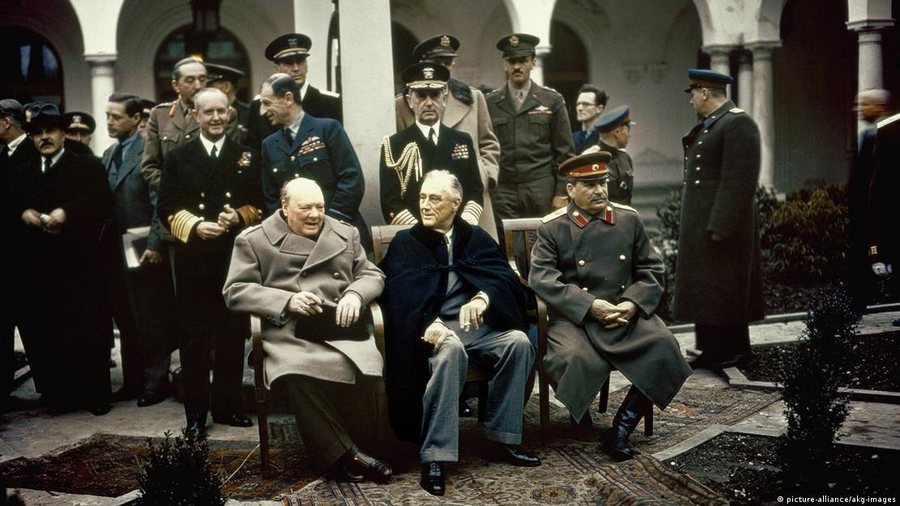
The shadow of the "New Yalta" over Ukraine and the temptation of great powers to negotiate sovereignty in the name of stability...
World history has a cynical tendency: it changes names, but not mechanisms. The Yalta of 1945 was not just a diplomatic conference; it was a pure act of geopolitical engineering, where the principle of self-determination was sacrificed in the name of temporary stability. Today, as the world confronts the war in Ukraine and Russia’s revanchist ambition, the shadow of that Yalta is returning; quieter, more technocratic, but just as dangerous.
The idea of a “grand solution” through territorial compromise, which is circulating in some Western circles, is essentially a return to the logic of spheres of influence. It presupposes that peace is achieved by accepting the fait accompli, legalizing aggression, and sacrificing a state’s sovereignty on the altar of “realpolitik.” This is not strategic prudence; it is surrender camouflaged in diplomatic language.
Crimea is not just an annexed peninsula. It is a precedent. A test for the international order and for the West's willingness to defend the principles on which it has built its moral legitimacy since World War II. Any tolerance of the Russian status quo in Ukraine would automatically translate into a global message: borders are negotiable and international law applies only to the weak.
In this sense, the danger of a “New Yalta” lies not only in the potential negotiating tables, but in the mindset that is becoming normalized; that small democracies are bargaining chips and that short-term stability is more important than long-term justice. This logic has always failed. It produces false peace and more violent future conflicts.
For countries like Albania and the Balkan region, this is not an abstract debate. Our history is full of small Yaltas, with decisions made far from us and above us. Therefore, any relativization of the aggression in Ukraine must be seen as a direct threat to European security and order as a whole.
Yalta did not die in 1945. It simply changes form each time principles are replaced by fear and strategic fatigue. The question today is not whether the West can negotiate with Russia, but whether it is prepared to pay the moral and historical price of a compromise it knows is wrong./ Pamphlet




Kohet ndryshojne e gjithashtu situatat ndryshojne, sot ne nuk kemi nje Rusi si BRSS e Stalinit qe pushtoi gjysmen e Evropes dhe ju imponua si SHBA e Anglise ne teritoret qe deshironte ti merte. Gjithashtu kemi nje SHBA qe po rikthehet ne Izolicionin e saj historik ne kontinetin e Amerikes. Gjithashtu kemi nje Evrope qe e bashkuar siç eshte sot eshte shume ma e forte se Evropa e vitit 1945 Kohe te reja faktore te rinj!