


 Shkruar nga Diplomatico | Pamfleti.net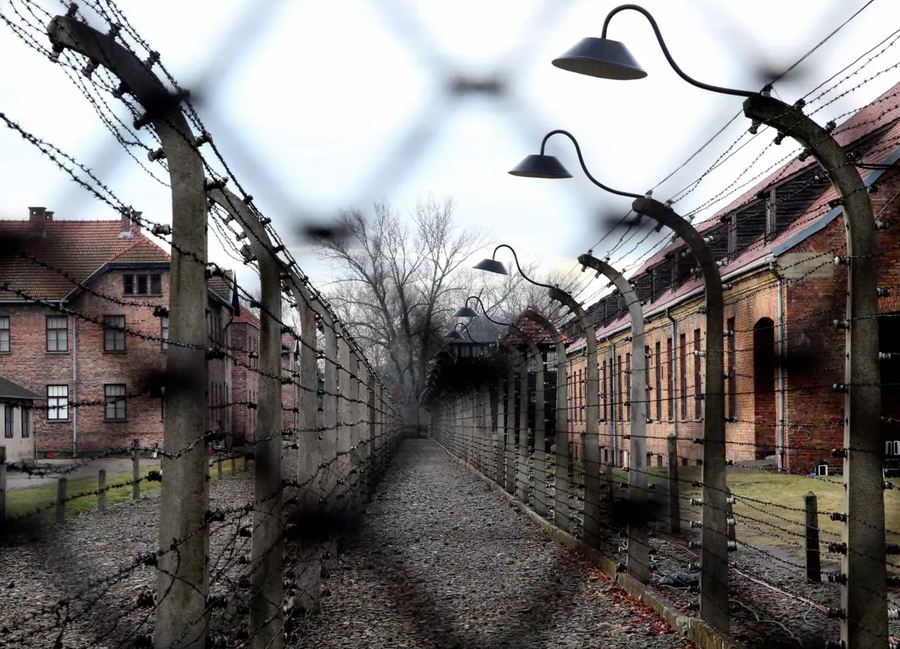
Auschwitz and the silence that kills as much as hatred...
There are places that need no explanation. Their silence speaks for itself. Auschwitz-Birkenau is one of them. It is not simply a place of memory, but a moral boundary where humanity failed; not only those who killed, but also those who became accustomed to killing.
There, evil did not burst forth like a storm. It came slowly. It sat on tables, it became routine, it became part of the day. While one side of the wire devoured life, the other side demanded normality. And that is the real shock: the fact that cruelty did not disrupt daily life, but coexisted with it.
History is often told as a confrontation between victim and executioner. But Auschwitz teaches us something more painful: that the greatest catastrophes arise when societies cease to feel. When injustice is seen but not experienced. When hatred is not opposed but tolerated as “something temporary.”
Evil does not always have a monstrous face. It often has an ordinary face. It speaks simple language, demands obedience and promises order. And that is precisely where the danger lies: when crime loses its name and becomes a procedure, when man is transformed into a number, when conscience becomes weary.
Today, the world seems once again ready to relativize pain. Victims are measured by interests, wars are explained by justifications, hatred is disguised as ideology. In this climate, memory is not a moral luxury. It is an obligation.
Auschwitz does not ask us to remain hostage to the past. It asks us to be vigilant towards the present. Because history does not repeat itself identically, but follows the same path: it begins with silence and ends with tragedy./ Pamphlet







Keto ndertesa te pakten nga jashte duken si hotele e 5 yje krahasuar me ish kapanonet tona ushtarake e lere me burgjet e Spacit.